We use cookies to remember your interests and show you more relevant ads. You choose whether we may store your browsing behaviour (PDPA).
How to buy bank-foreclosed (NPA) property in Thailand in 2026 — auction steps, financing, foreign quota rules, and the risks every expat buyer must check first.
Buying Bank-Foreclosed Property in Thailand (NPA): 2026 Guide for Foreigners & Expats
Buying bank-foreclosed property in Thailand — known locally as NPA (Non-Performing Asset) — can get you a home or investment unit below market price, because banks want these assets off their books fast. But the discount comes with strings attached: properties are sold strictly as-is, and foreign buyers face an extra layer of ownership rules that can turn a bargain into an expensive mistake. Here's what you need to know in 2026.
When a borrower defaults on a mortgage, the bank eventually takes ownership of the property and resells it directly through its own NPA channels — websites, mobile apps, and scheduled online auctions. Unlike court-ordered auctions through the Legal Execution Department, buying NPA directly from a bank is a straightforward private sale: the title has already been cleared through the bank, and you can usually apply for a mortgage rather than paying cash.
Banks price NPA stock to move. Government Housing Bank (GH Bank), Thailand's biggest player in this market, ran its first online auction of 2026 with 864 properties sold for over 915 million baht, and its July 2026 auction lists more than 2,000 properties nationwide with promotional financing at 0% interest for up to two years (ThaiPublica). Other major banks — GSB, Kasikorn, SCB — maintain their own NPA listings year-round, covering houses, condos, townhouses, commercial buildings, and land across Bangkok, Chiang Mai, Phuket, Pattaya, and beyond.
Yes — but the same foreign ownership rules apply as with any Thai property purchase:
Condos are the practical route. Foreigners can own condo units freehold, provided foreign ownership in the building stays within the 49% quota. This is the single biggest trap in NPA purchases: if the building's foreign quota is already full, the Land Department will refuse to register the transfer — even if the bank sold you the unit. Always verify quota availability with the juristic person office in writing before bidding.
Land and houses cannot be owned freehold by foreigners. Options are long-term leasehold structures or ownership through a Thai spouse or properly structured arrangements — get independent legal advice before attempting these (Thailand Law Online).
Funds must come from abroad. To register a freehold condo, you need a Foreign Exchange Transaction (FET) certificate proving the purchase funds were remitted into Thailand in foreign currency under your name.
Note that Thai government incentives like the reduced 0.01% transfer fee apply only to Thai-national individual buyers, so foreigners should budget the standard 2% transfer fee plus other closing costs.
Browse bank NPA listings — each bank publishes its inventory online; GH Bank uses its GHB ALL HOME app for auctions.
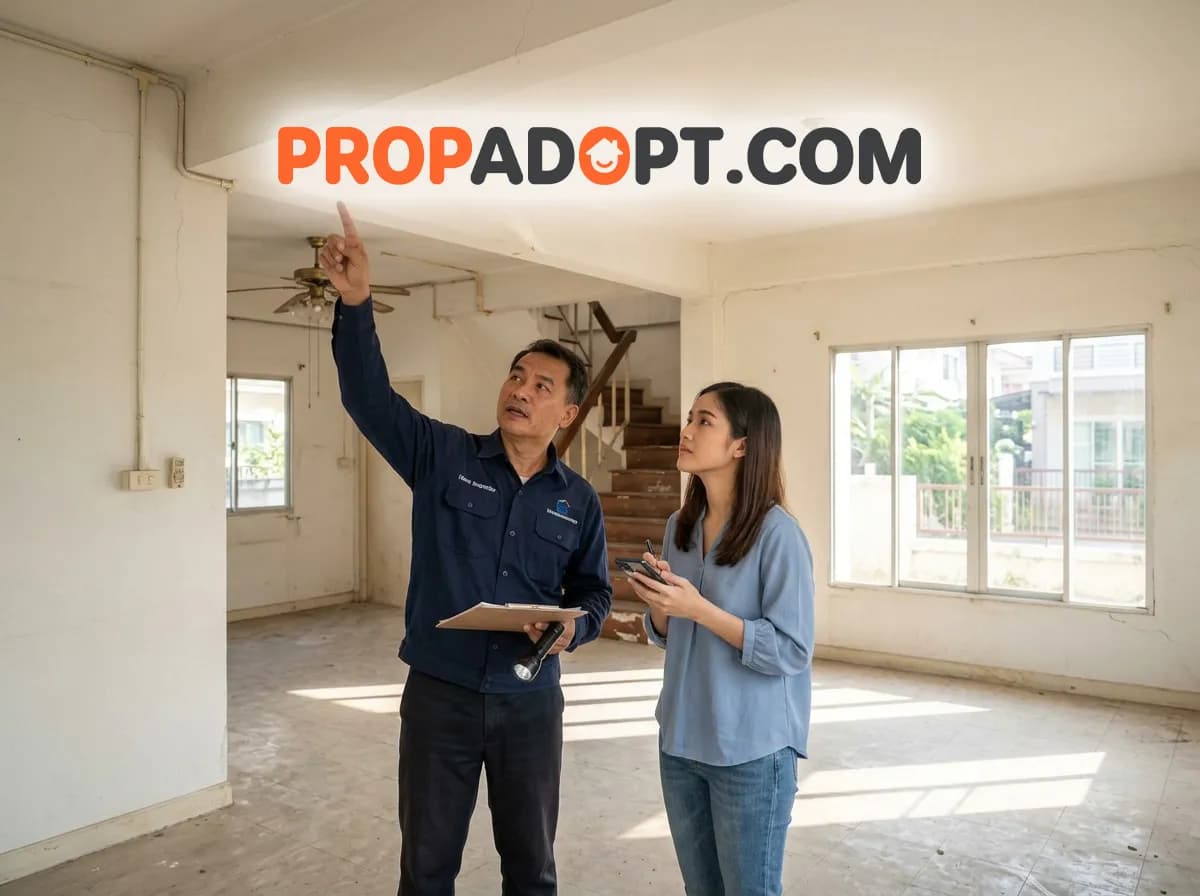
Inspect the property in person — never skip this. NPA sales are as-is with no warranty. Bring a builder or engineer, check the structure, water and electrical systems, and estimate renovation costs before you set your maximum price.
Check for occupants. Some foreclosed homes still house the former owner or squatters, and eviction may become the buyer's problem. Ask the bank to clarify occupancy status and responsibility in writing.
Register and place a deposit — for GH Bank online auctions, 10,000 baht per property (100,000 baht for properties above 10 million baht), refundable if you don't win (GH Bank Blog).
Bid with a hard ceiling — your ceiling should be property price + repairs + fees, benchmarked against comparable listings in the same area. You can compare current asking prices on Prop Adopt.
Sign, finance, and transfer at the Land Department. Promotional NPA financing is generally available to buyers who qualify for Thai bank lending; most foreigners will need cash or overseas financing.
Is NPA the same as a court auction? No. NPA is sold directly by the bank that owns it — simpler paperwork and mortgage-friendly. Court (Legal Execution Department) auctions are a separate process with stricter payment terms and higher risk around possession.
Can I get a Thai mortgage as a foreigner for an NPA condo? It's difficult. Only a few lenders offer mortgages to non-residents and terms are conservative. Most foreign NPA buyers pay cash remitted from abroad.
What's the biggest risk for a foreign buyer? Foreign quota. A condo bought at auction in a building with a full 49% foreign quota cannot be registered in your name. Verify before bidding, not after.
Are foreclosed properties in Thailand really cheaper? Often, but not always. "Below appraisal" isn't automatically "below market" — always compare against actual asking prices for similar units in the same location.
Bank-foreclosed property in Thailand can be genuinely good value in 2026's buyer-friendly market — but only for buyers who inspect in person, verify the foreign quota, confirm occupancy status, and price in renovation and transfer costs before bidding. For big-ticket or legal questions, consult a qualified Thai property lawyer.
Browse and compare properties across Thailand — including second-hand homes and condos — at propadopt.com, and follow Prop Adopt for property insights you can actually act on.